
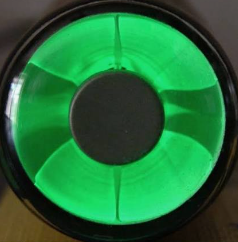
How often, as a child, did I sit in front of those imposing radio cabinets, carefully turning the tuning knob and gazing in fascination at the „magic eye.“
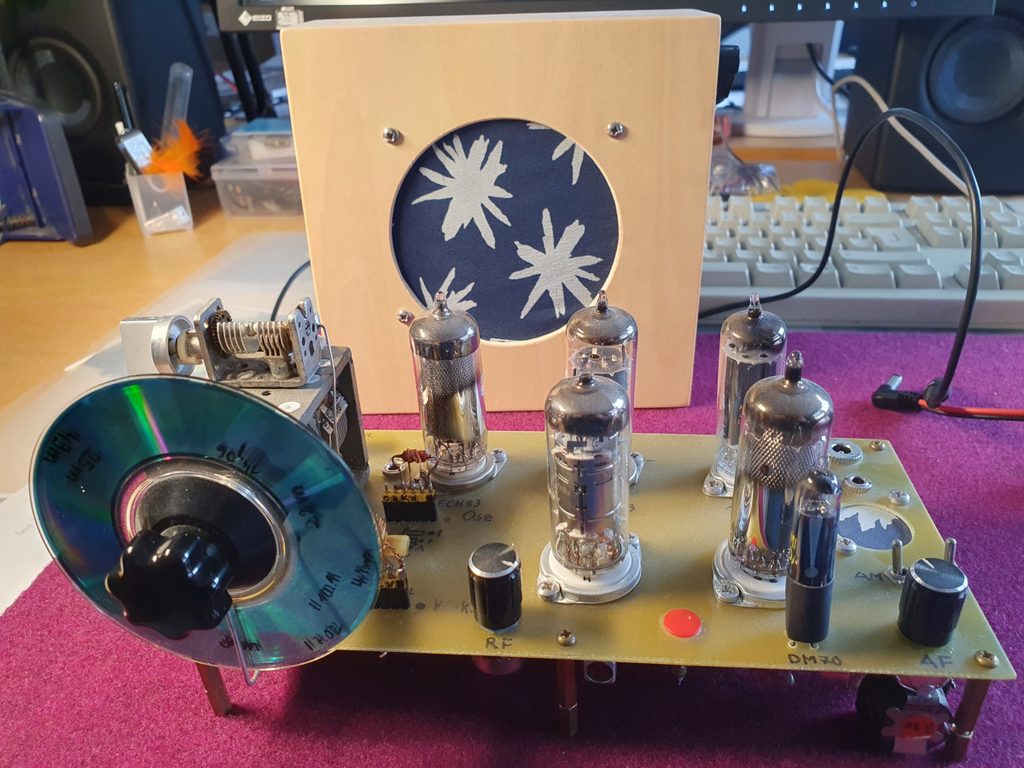
Ever since I was a young man, it had been my dream to build an AM tube superheterodyne receiver. Without the proper test equipment and signal generators, it was a daunting prospect.
Now, 55 years later, that dream was finally to come true.
I was somewhat wary of the standard 250V anode voltage. That is why I chose a set of tubes originally developed in the 1950s specifically for car radios—tubes capable of operating on an incredibly low anode voltage of just 6V.
I opted for a 12V supply, which also served as the heater voltage.
Of course, that isn’t enough to produce the typical 2–4W of audio output. However, I found what I needed in the States: the 12K5 tube, which delivers a respectable 50mW at 12V on the anode. And the „magic eye“ couldn’t be left out. The DM70 runs on 60 V supplied by twenty button cells connected in series.
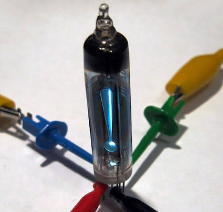
After all, I was determined not to use any semiconductors— not even as diodes.
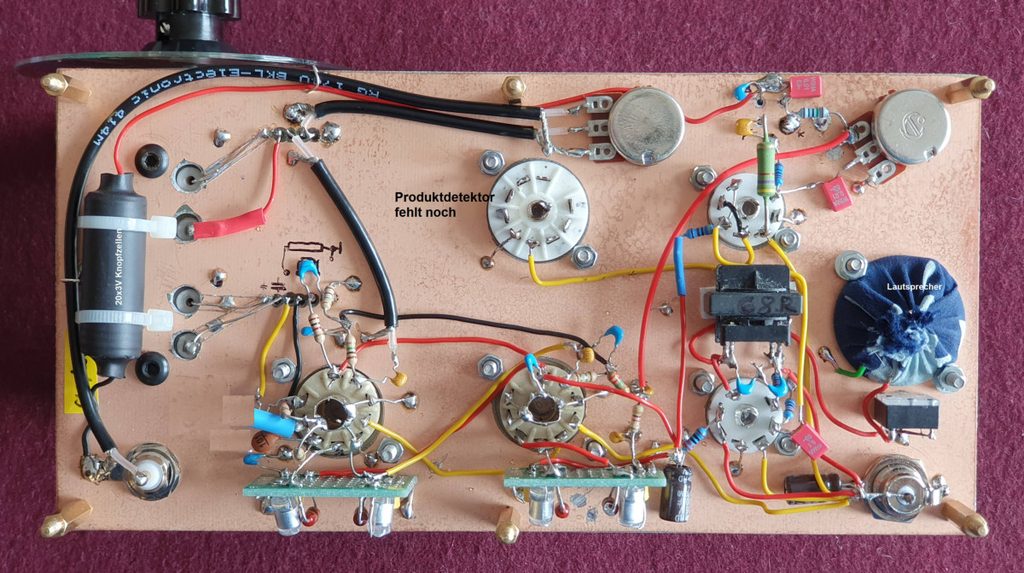
Bandpass filters for a 455kHz IF are hard to come by, so I boldly decided to build my own using fixed inductors.
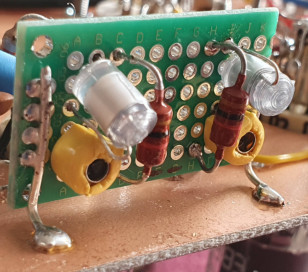
It all worked surprisingly well, prompting me to add a product detector along with a modern SSB filter and an audio CW filter.
Naturally, the frequency stability in SSB mode is mediocre due to the open-chassis construction.
But my dream did come true.
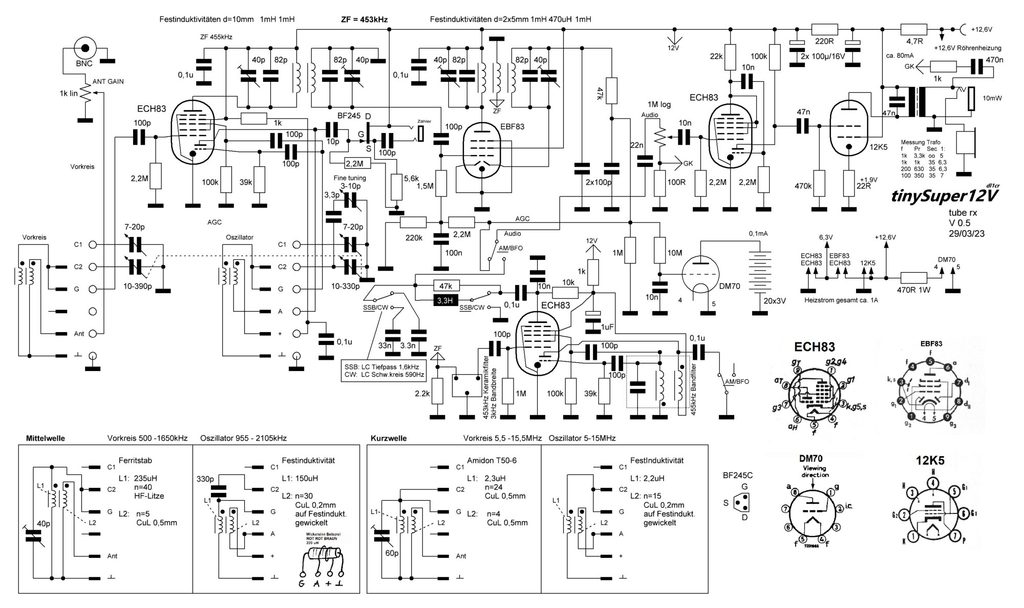
SW is also alive—sometimes.