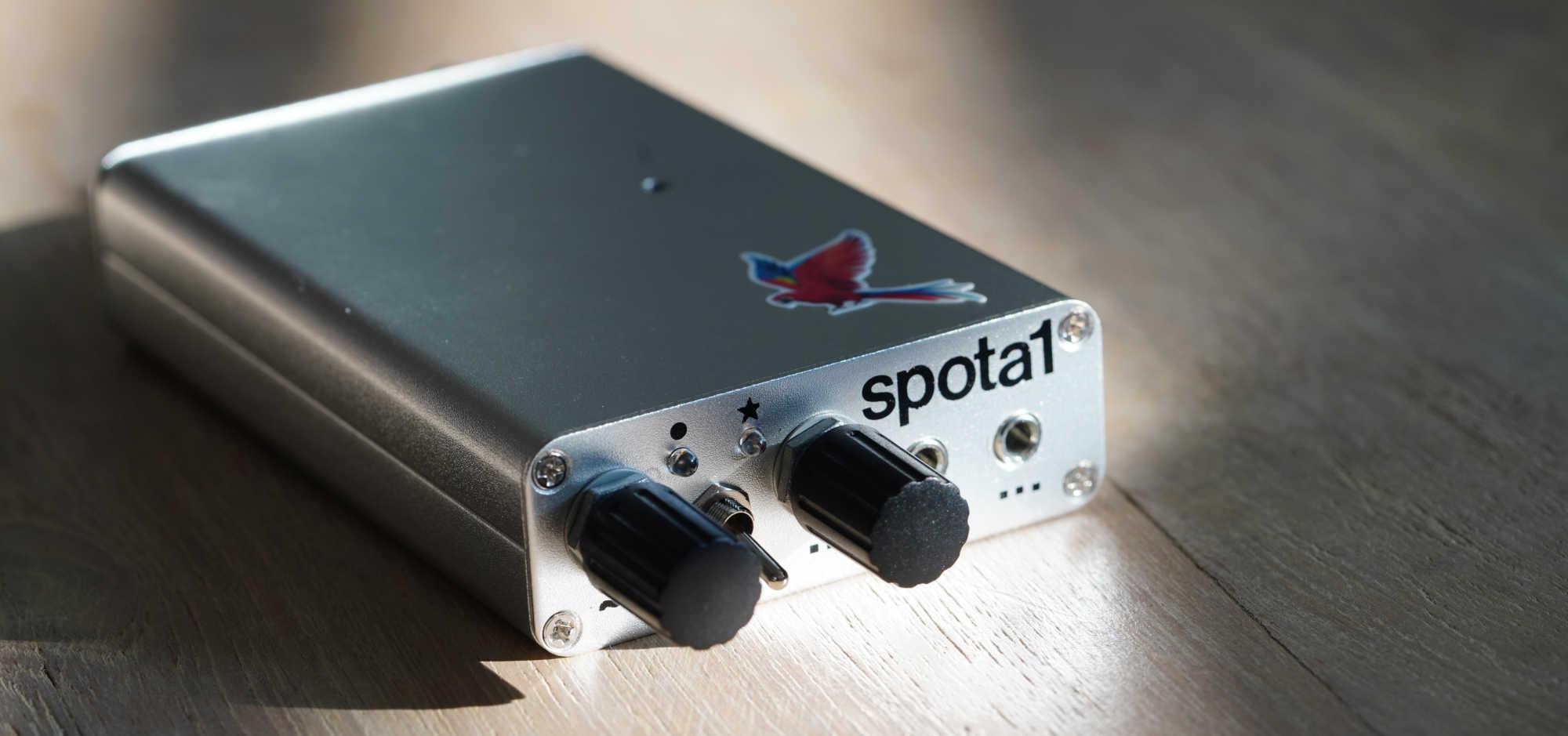

8W single-channel CW transceiver
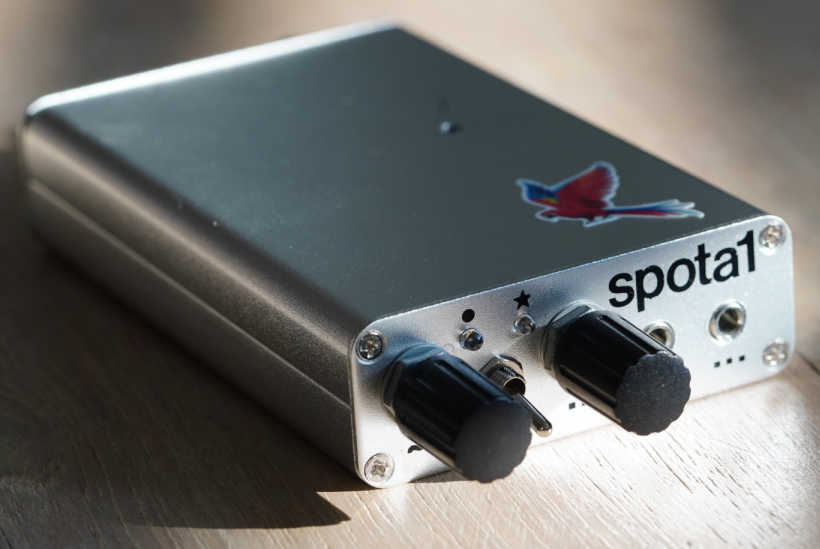
A deluxe version of the CW Pixie (the most minimalist and affordable DIY radio)
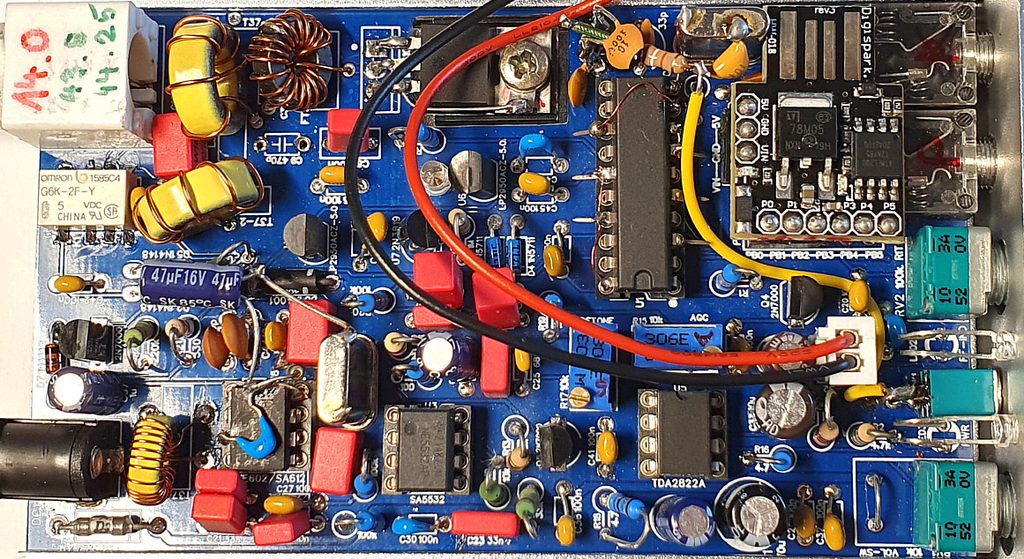
- Direct-conversion receiver covering both sidebands
- Fixed frequency operation on the 60, 40, 30, 20, 17, or 15-meter bands, depending on hardware configuration
- Operating voltage of 7 to 12 V with an output power of 2 to 8W
- CW mode with audio filter, internal keyer and memory
- AGC
- RIT
- Internal speaker
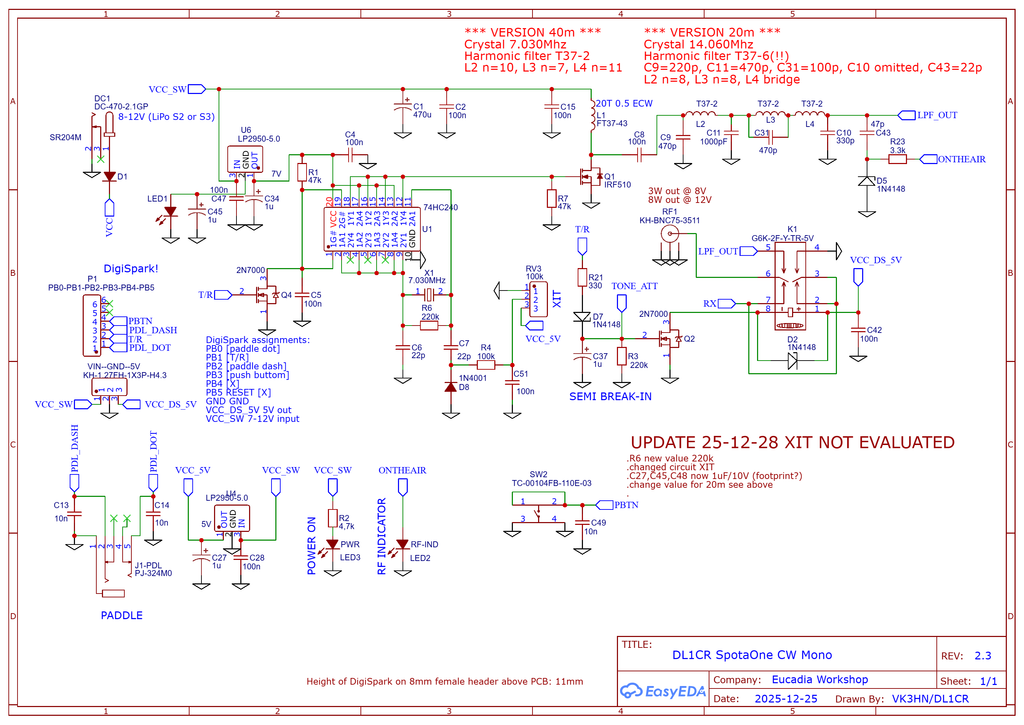
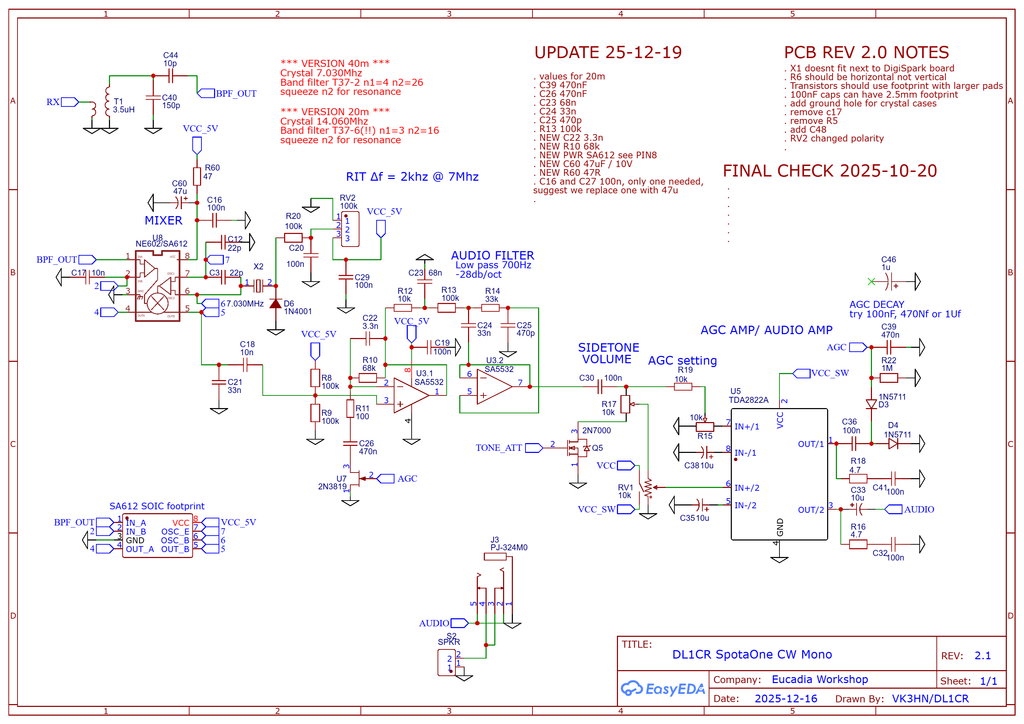
The PCB was designed using EasyEDA and manufactured by JLCPCB. Those in the know can download the schematic and order the pcb here
https://oshwlab.com/dl1cr/spotaone1_copy_copy
Here is a clip of the first tests with Uwe (DK8OA) as the operator. The prototype is still built in „Manhattan style.“
Source code in a very early version
/////////////////////////////////////////////////////////////////////////////
// CW Keyer for DigiSpark Attiny85
// Version 28/12/2023 V2 by DL1CR
//
// txON HIGH // txOFF LOW
/////////////////////////////////////////////////////////////////////////////
#include "Wire.h"
#include <EEPROM.h>
/////////////////////////////////////////////////////////////////////////////
#define dotPort 0
#define outPort 1
#define dashPort 2
#define modePort 3
#define tonePort 4
/////////////////////////////////////////////////////////////////////////////
//  CQ CQ DE DL1CR/P  und  TEST DE DL1CR
char *mem[] = {"-.-. --.- -.-. --.-  -.. .  -.. .-.. .---- -.-. .-. -..-. .--.           ",
               "- . ... -  -.. .  -.. .-.. .---- -.-. .-.       "};
////////////////////////////////////////////////////////////////////////////
int count = 0;
int ticks = 80;  // 80 ticks = 15wpm
bool dotMem = false;
bool dashMem = false;
////////////////////////////////////////////////////////////////////////////
void setup()  {
  // Port setzen
  digitalWrite(outPort, LOW); // txOFF LOW
  pinMode(outPort, OUTPUT);
  pinMode(dotPort, INPUT_PULLUP);
  pinMode(dashPort, INPUT_PULLUP);
  pinMode(modePort, INPUT_PULLUP);

  EEPROM.get(0, ticks);
  if (ticks > 125 | ticks < 50) ticks = 80;   // 10-25wpm
}

void  txOn() {
  digitalWrite(outPort, HIGH);   // !!!
  // tone(tonePort, 700);
}

void  txOff() {
  digitalWrite(outPort, LOW);  // !!!
  // noTone(tonePort);
}

boolean dash() {
  return !digitalRead(dashPort);
}

boolean dot() {
  return !digitalRead(dotPort);
}

boolean squeeze() {
  return (dash() && dot());
}

void doDot() {
  count = 0;
  dotMem = false;
  txOn();
  while (count < ticks) {
    if (dash()) dashMem = true;
    delay(1);
    ++count;
  }
  count = 0;
  txOff();
    while (count < ticks) {
     if (dash()) dashMem = true;
    delay(1);
    ++count;
  }
}

void doDash() {
  count = 0;
  dashMem = false;
  txOn();
  while (count < (ticks * 3)) {
    if (dot()) dotMem = true;
    delay(1);
    ++count;
  }
  count = 0;
  txOff();
  while (count < ticks) {
    if (dot()) dotMem = true;
    delay(1);
    ++count;
  }
}

void checkPaddle() {
  if (dot()) doDot();
  if (dash()) doDash();
}

void checkMode() {
  if(digitalRead(modePort)) return;

  if (dot())
    memoryMode(0); // cq
  else
    if (dash())
      memoryMode(1); // test
    else
      wpmMode();
}

void wpmMode() {
  while (!squeeze()) {
     txOn();
     delay (ticks);
     txOff();
     delay (ticks);
     if(dot())
        --ticks;
     if(dash())
        ++ticks;
  }
  EEPROM.put (0, ticks);
}

void memoryMode(int typ) {
  String cw = String(mem[typ]);

  while (43){
    for (int i=0; i<cw.length(); i++) {

      switch (cw.charAt(i)) {
        case '.':
          txOn();
          delay (ticks);
          txOff();
          delay(ticks);
          break;

        case '-':
          txOn();
          delay (3*ticks);
          txOff();
          delay (ticks);
          break;

        case ' ':
          delay (3*ticks);
          break;
      } // switch

      if(squeeze()) return; // Abbruch
   } //for
  } //while
}

void loop() {
  if (dotMem) doDot();
  if (dashMem) doDash();

  count = 0;
  checkPaddle();
  checkMode();
}